

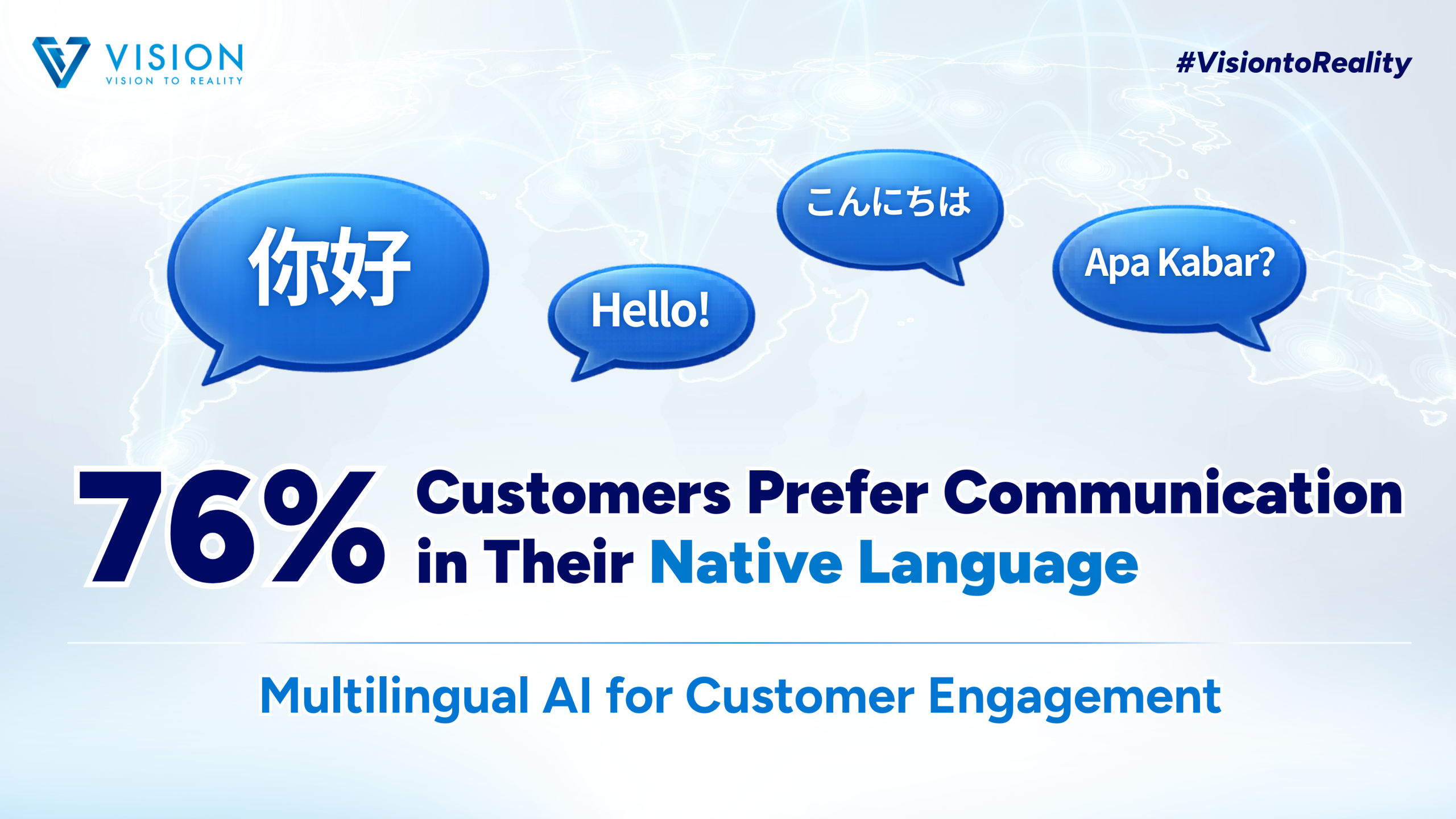
As businesses grow across regions, languages are becoming a bigger part of the customer experience. Customers no longer just want fast responses. They want information delivered in a way that feels familiar, clear, and easy to understand.
This is especially important in multilingual markets, where customers may be comfortable reading, asking, and deciding in different languages. In these environments, language is not just a communication tool. It directly shapes trust, confidence, and purchase decisions.
CSA Research’s findings reinforce this clearly. In its global survey of 8,709 consumers across 29 countries, 76% said they prefer to buy products with information in their native language, while 40% said they would not buy from websites in other languages at all.
That is a strong signal for businesses. Language is no longer something to consider only at the final stage of localisation. It plays a direct role in whether customers feel understood and confident enough to move forward.
Language is More Than a Translation Layer
Many businesses still approach multilingual support as a simple translation exercise. Content is first created in one primary language, then translated afterwards for other markets.
While this may improve accessibility, it often falls short of creating a truly natural customer experience. Language is more than just converting words. It affects how clearly information is understood, how relevant a message feels, and how much trust a customer places in a brand.
When people can engage in the language they are most comfortable with, the experience feels more intuitive and reassuring. They spend less effort trying to interpret meaning and more focus on evaluating the product, service, or offer itself.
That is why multilingual engagement should not be treated as an add-on. It should be built into the customer journey from the start.
Why AI is Becoming Essential
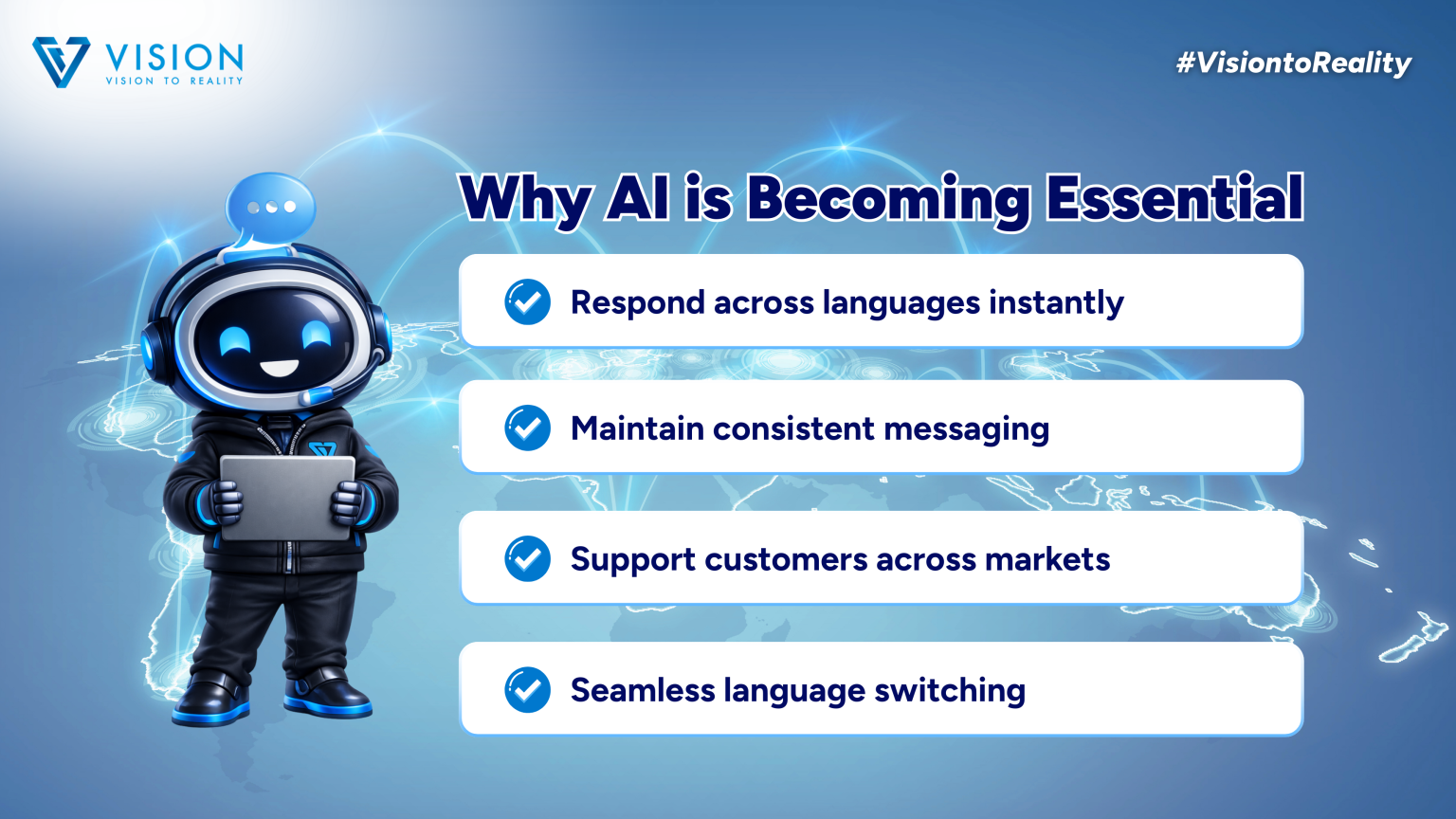
As businesses expand across markets, supporting multiple languages manually becomes harder to sustain. Response times slow down, consistency becomes difficult to maintain, and operational costs increase.
This is where AI becomes increasingly valuable. AI makes multilingual engagement more scalable by helping businesses respond across languages faster and more consistently, while reducing the pressure on support and operations teams.
More importantly, AI can support real conversational behaviour. Customers do not always stay in one language from start to finish. In multilingual markets, they often switch naturally depending on context, comfort, or the type of question they are asking.
A user may begin in Malay, continue in English, and ask for clarification using another familiar phrase or expression. Traditional systems often struggle with this. AI-powered conversations, however, can adapt more fluidly and create a smoother customer experience.
🗣️Building Conversations That Feel More Natural
This flexibility matters because real conversations are rarely rigid. People do not think in fixed language flows, especially in diverse regional markets where multiple languages are used interchangeably in daily life.
When businesses force customers into a single-language journey, the interaction can feel mechanical and limiting. It may technically function, but it does not reflect how people naturally communicate.
A more effective approach is to design multilingual customer journeys that are adaptive. That means allowing customers to engage in the way that feels most natural to them, without unnecessary friction.
This is where AI has moved beyond simple automation. It is not only helping businesses translate at scale. It is helping them create customer interactions that feel more human, inclusive, and context-aware.
Vision’s Approach to Multilingual Engagement
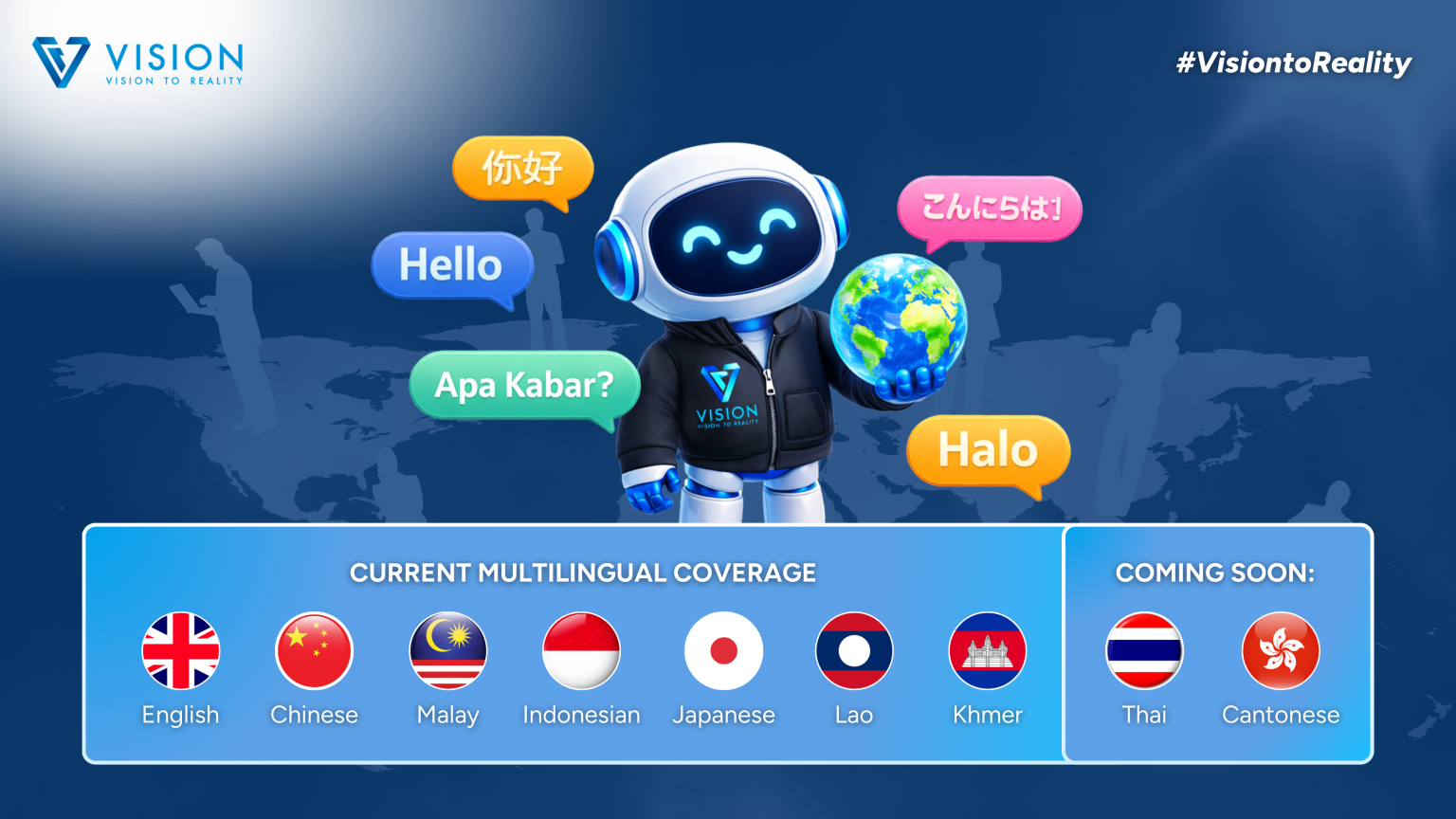
At Vision, we see multilingual AI as more than just a language feature. It is part of delivering customer conversations that are more natural, adaptive, and aligned with how people actually communicate.
🔠Available languages:
Vision currently supports English, Chinese, Malay, Indonesian, Japanese, Lao, and Khmer, with Thai and Cantonese coming soon. Just as importantly, conversations are not locked into one language throughout the interaction.
A customer may start in Malay and continue in English if that feels more natural. This same flexibility can also apply across other languages. It is especially valuable in multilingual regions where language use is fluid and context-driven.
Rather than forcing customers to adapt to the system, businesses can offer an experience where the system adapts to the customer. That shift makes multilingual engagement more practical, more scalable, and more aligned with modern expectations.
Break Language Barriers Today!
As customer bases become more diverse, multilingual engagement will become a bigger competitive advantage. Businesses that communicate clearly across languages will be better positioned to build trust, improve accessibility, and serve customers more effectively.
Customers increasingly expect brands to meet them where they are, and language is a major part of that expectation. They want interactions that feel natural, not translated as an afterthought.
Vision AI makes that possible. It allows businesses to move beyond one-way translation and toward multilingual customer journeys that feel smoother, faster, and more human.
In that sense, multilingual AI is not just a support capability. It is becoming a core part of how modern businesses build stronger customer relationships across markets.