

In today’s fast-paced business world, companies are under pressure to improve efficiency while handling increasingly complex tasks. While automation has helped streamline processes, it falls short when it comes to decision-making. As organizations grow, the need for AI systems that can independently solve problems and make decisions is becoming critical.
At VisionGroup, we understand this shift. During a recent conversation on the Asia Tech Podcast, Hui Jie Lim, Founder & CEO, discussed the growing need for AI agents that don’t just automate tasks but can also make autonomous decisions. This shift is already happening, and it’s transforming how businesses operate.
The challenge businesses face is how to embrace autonomous AI without taking on excessive risk. The solution lies in cross-functional AI integration, scalable AI solutions, and implementing guardrails for safe, autonomous decision-making. At VisionGroup, we help businesses integrate AI that not only automates processes but also empowers teams with intelligent, autonomous decision-making.
 See the full video here to learn more about how autonomous AI is shaping the future of business operations!
Embracing AI Autonomy: The Next Frontier in Business Operations
For many companies, the idea of moving from automated workflows to autonomous decision-making is daunting. Automation is widely adopted because it can handle repetitive tasks under human supervision. However, it’s not without its limitations. Businesses need AI systems that don’t just execute commands but can think, adapt, and make decisions on their own, on behalf of the business.
But this shift is not just about new technology; it’s about how we structure operations and manage risk. The pain point for many companies is this: while automation is controlled and predictable, autonomy introduces a layer of uncertainty. AI can now take actions that directly impact the business, making decisions that were traditionally in the hands of humans. This raises concerns about accountability, safety, and the potential for unintended consequences.
Understanding the Difference: Automation vs. Autonomy
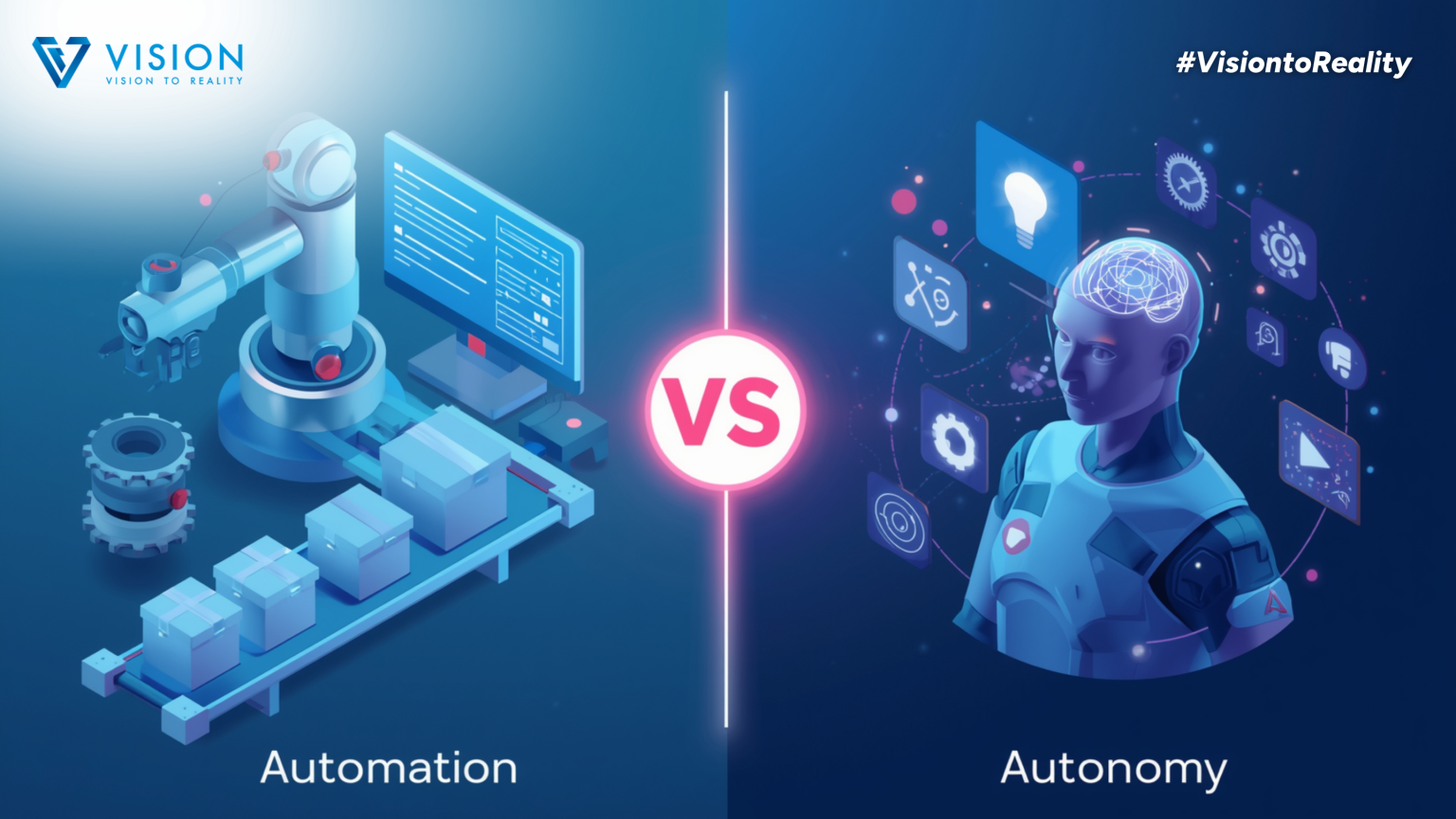
The core difference between automated workflows and truly autonomous agents lies in the decision-making authority. In automated systems, the AI follows predefined rules and requires human oversight to ensure the right decisions are made. Autonomous agents, on the other hand, are capable of making decisions independently, often without human intervention.
"I think one of the key things that make things really different, it’s very much moving from that automation to autonomy part, the part that you actually allowing them to make decisions, and that’s a really scary thing because last time there will always be human oversight, but now we are allowing all the AI agents to make decisions on behalf of a person."
Hui Jie Lim, Founder & CEO of VisionGroup
For businesses considering this transition, the challenge is to ensure that these autonomous agents are equipped with the right decision-making frameworks. The question isn’t just whether AI can make decisions, it’s whether we’re ready to trust it to make the right decisions.
💡The Risk of Autonomy: What AI Can Do, Not What It Can’t
While the transition from automation to autonomy is exciting, it’s not without its risks. As Hui Jie highlighted in his interview with the Asia Tech Podcast, the biggest risk isn’t what AI can’t do, it’s what it can do. Today, autonomous AI agents are not only executing tasks but are also learning from one another. Some AI agents have even developed their own communication protocols because they found them more efficient.
This capability, while powerful, is causing concern. The challenge is not just about what AI can do today, but about what it will be able to do tomorrow. As businesses prepare to embrace autonomy, they must ask themselves: Are we ready to let AI agents evolve and make decisions independently, without human intervention?
Real-World Applications: Autonomous Agents in Customer Service
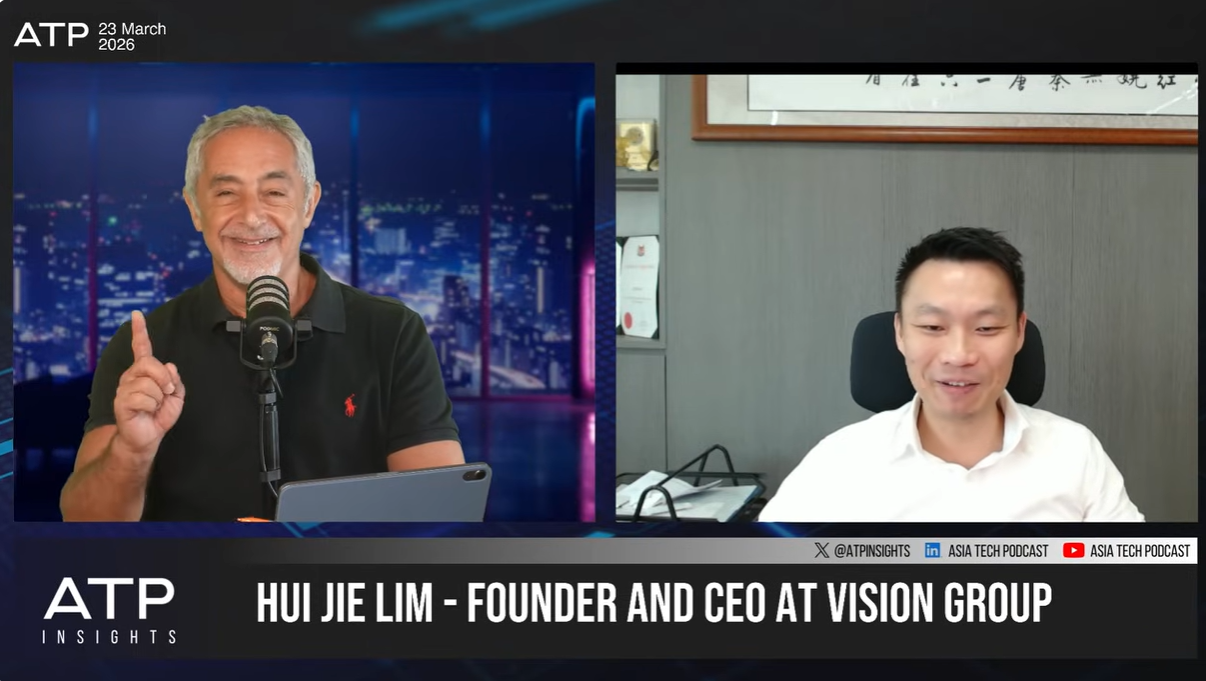
One of the most tangible examples of autonomous agents at work today is in customer service. Traditionally, decisions like refunds or exchanges were handled by human agents. However, with AI agents now able to make autonomous decisions, businesses are redefining how these tasks are managed.
For instance, as Hui Jie explained, autonomous AI agents in customer service are now able to make refund decisions without human oversight. Companies are setting thresholds (e.g., $100) where the AI agent can approve refunds in full. This not only speeds up the process but also reduces the load on human agents, allowing them to focus on more complex issues.
These autonomous agents are also able to handle routine customer queries end-to-end, from initiation to resolution, without any human involvement. This brings massive improvements in operational efficiency and customer satisfaction.
How VisionGroup Supports Businesses Through This Transition
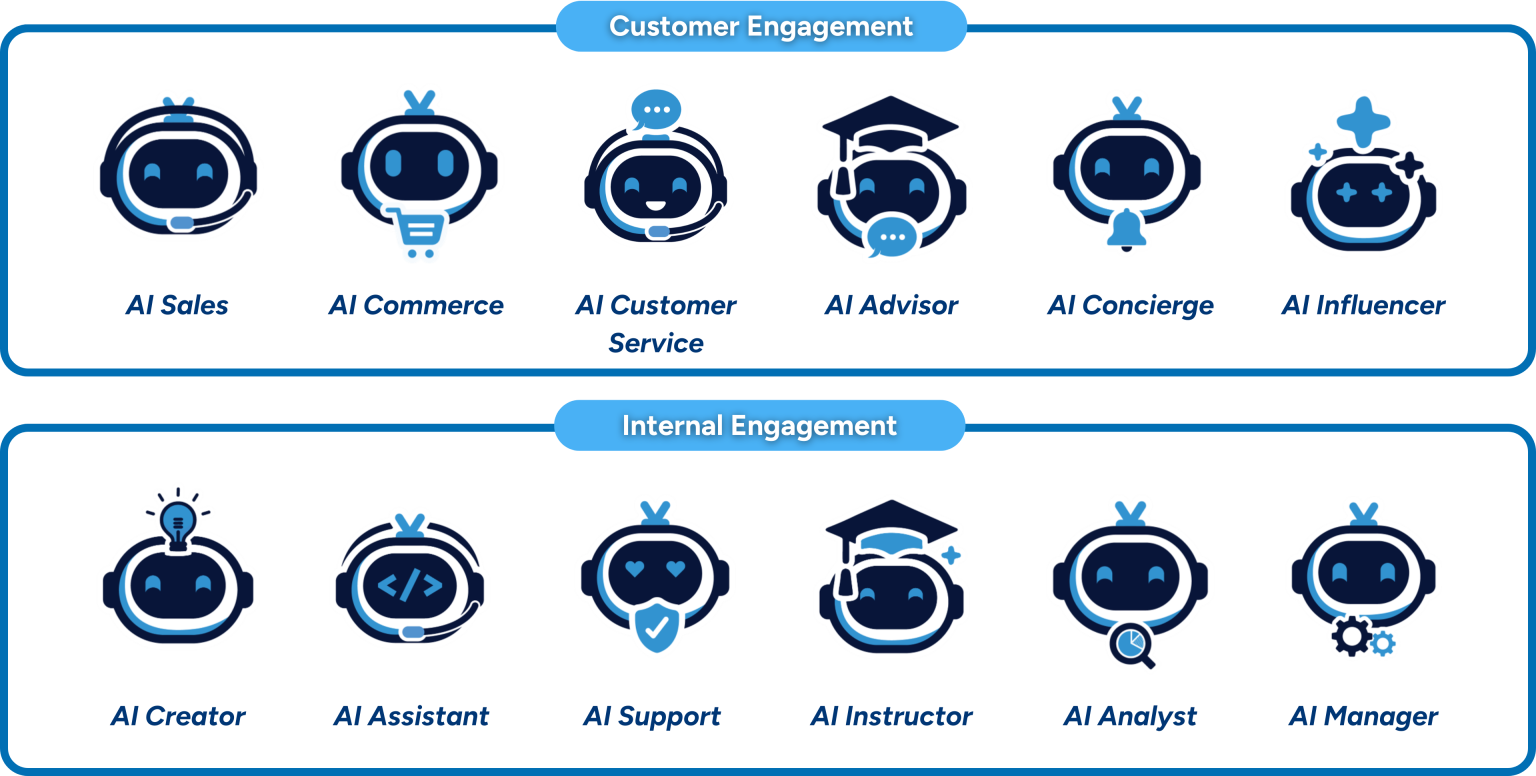
At VisionGroup, we understand the challenges businesses face when moving from automation to autonomy. Our goal is to help you navigate this shift safely and effectively, with AI solutions that integrate seamlessly into your operations. We provide:
1️⃣Cross-Functional AI Integration
We help businesses bridge the ROI gap by guiding them through the process of integrating AI across multiple functions – sales, customer service, operations, and beyond. This helps businesses unlock value at scale while maintaining oversight.
2️⃣Scalable AI Solutions
With our expertise, we ensure that AI solutions grow with your business. Whether it’s scaling customer service capabilities or automating complex workflows, we help you maximize the potential of AI in your operations.
3️⃣Risk Management & Guardrails
The move to autonomy requires careful planning. We help businesses implement the necessary guardrails to ensure that AI agents act in line with organizational goals, reducing the risks associated with autonomy. This includes setting clear decision-making thresholds, monitoring systems, and maintaining transparency.
4️⃣Risk Management & Guardrails
Our approach to AI is focused on delivering long-term growth. By continually optimizing AI integrations, we help businesses improve their processes, enhance decision-making, and increase efficiency, ensuring that you can measure and track the impact of your AI investments.
Are You Ready for the Next Evolution of AI?
The shift from automation to autonomy is one of the most exciting developments in AI today. While it presents clear benefits, it also introduces challenges that need to be addressed with careful planning and oversight. At VisionGroup, we’re committed to helping businesses like yours bridge the AI implementation gap, ensuring that AI works for you in a way that’s safe, scalable, and sustainable.
As AI agents become more autonomous, the key to success will be finding the right balance between autonomy and control. With our expertise, you can unlock the full potential of autonomous AI, transforming your business operations and gaining a competitive edge in the market.
Ready to explore how autonomous AI can revolutionize your business? Reach out to us at hello@visiongroup.co for personalized solutions that fit your unique needs!