

Across Asia-Pacific, food systems are facing growing instability. Climate volatility is disrupting crop yields, supplier reliability, and logistics routes.
At the same time, 30–40% of food is still lost or wasted across the value chain due to poor planning, fragmented coordination, and inefficient execution. Supply chains also remain reactive and siloed, making it harder for organisations to respond quickly when disruption happens.
On top of that, ESG expectations are rising. Regulators, investors, and consumers are demanding stronger sustainability standards, better traceability, and clearer accountability.
The challenge today is no longer just about supply. It is about visibility, speed, coordination, and the ability to make better decisions in a constantly shifting environment.
Why Current Systems Still Fall Short
The food industry generates a huge amount of data, but many organisations still struggle to turn that information into timely, coordinated action. Data remains scattered across teams, partners, and systems. Forecasting is often static, while execution is still slow, manual, and inconsistent.
As a result, businesses remain reactive when they need to be proactive. Risks surface too late, waste continues to build, and opportunities are missed because decision-making is not connected closely enough to execution. Food systems today are data-rich, but decision-poor.
What many organisations need today is not more reports or more dashboards. They need a way to connect fragmented signals, interpret them faster, and turn them into decisions that can be acted on across the value chain.
This is where GenAI starts to matter. When applied in the right workflows, it can help businesses move beyond passive visibility and support more connected, responsive, and actionable operations across sourcing, inventory, traceability, and planning.
Where Vision AI Creates Real Value Across the Food Value Chain
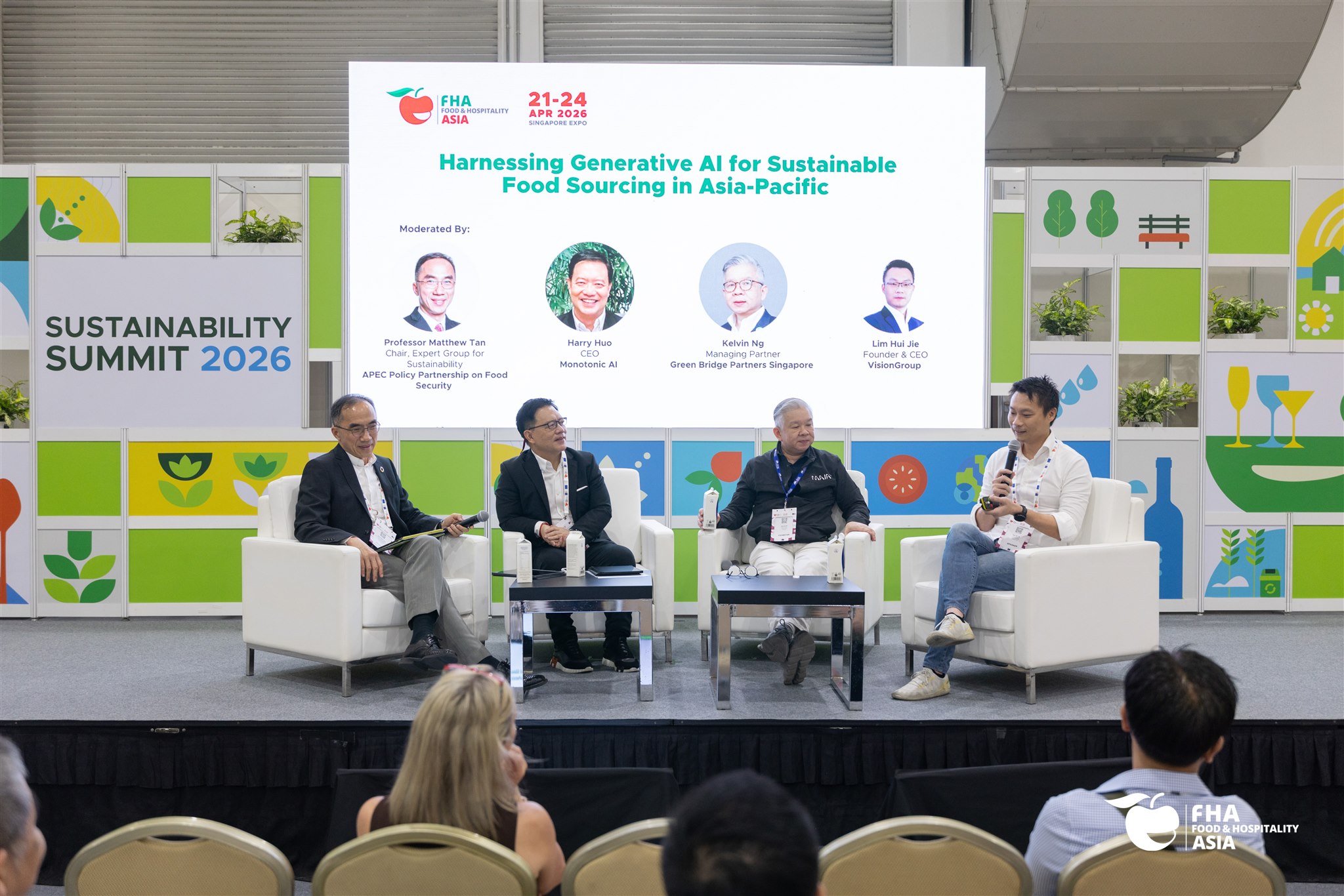
At FHA Sustainability Summit 2026, VisionGroup shared that Vision AI should not be seen as a point solution, but as a continuous intelligence layer across the food system.
- Predict demand across SKUs, locations, and channels
- Detect shifts early with historical and live signals
- Adjust procurement, replenishment, and inventory faster
- Reduce stockouts, overstock, and food waste
- Monitor sourcing risks and ESG compliance
- Evaluate suppliers against sustainability standards
- Generate ESG reports and trigger audit workflows
- Enable real-time traceability across the supply chain
- Optimise sourcing with climate, pricing, and yield signals
- Simulate scenarios across regions and supplier portfolios
- Rebalance supplier allocation as conditions change
- Support smallholder onboarding more efficiently
In demand forecasting and supply planning, Vision AI helps businesses predict demand in real time across SKUs, locations, and channels. Using historical and live demand signals, it can support faster adjustments to procurement, replenishment, and inventory levels, helping reduce stockouts, overstock, and food waste.
In traceability and ESG, Vision AI helps organisations monitor sourcing risks and ESG compliance across suppliers. It can also support supplier evaluation, ESG reporting, audit workflows, and real-time traceability across the supply chain.
In climate-smart sourcing, Vision AI enables more adaptive supplier networks. It helps businesses optimise sourcing using climate, pricing, and yield signals, simulate different scenarios, rebalance supplier allocation, and support smallholder onboarding more efficiently.
What Actually Works in Practice
High-Impact Decision Point
Start with one high-frequency decision where faster action can create measurable value.
End-to-End Workflows
Design workflows where AI recommendations lead directly to operational action.
Human-in-the-Loop Oversight
Keep human review in place for high-stakes decisions to build trust and control.
Data Before Complexity
Clean, connected data creates more value than advanced models built on fragmented inputs.
What actually works in practice is not applying AI everywhere at once, but applying it where decisions matter most. Organisations see stronger results when they focus on high-impact decision points, connect AI to end-to-end workflows, and ensure intelligence leads to real operational action, not just visibility.
At the same time, sustainable execution depends on keeping human oversight in place and building on the right data foundation. When businesses combine clear governance, connected workflows, and structured data, AI becomes far more than a tool for insight, it becomes a driver of faster decisions, stronger execution, and measurable impact.
The Future of Food Systems Will Belong to Those Who Apply AI Well
Over the next three to five years, food systems will continue shifting from human-directed operations to more continuously optimised, AI-enabled models.
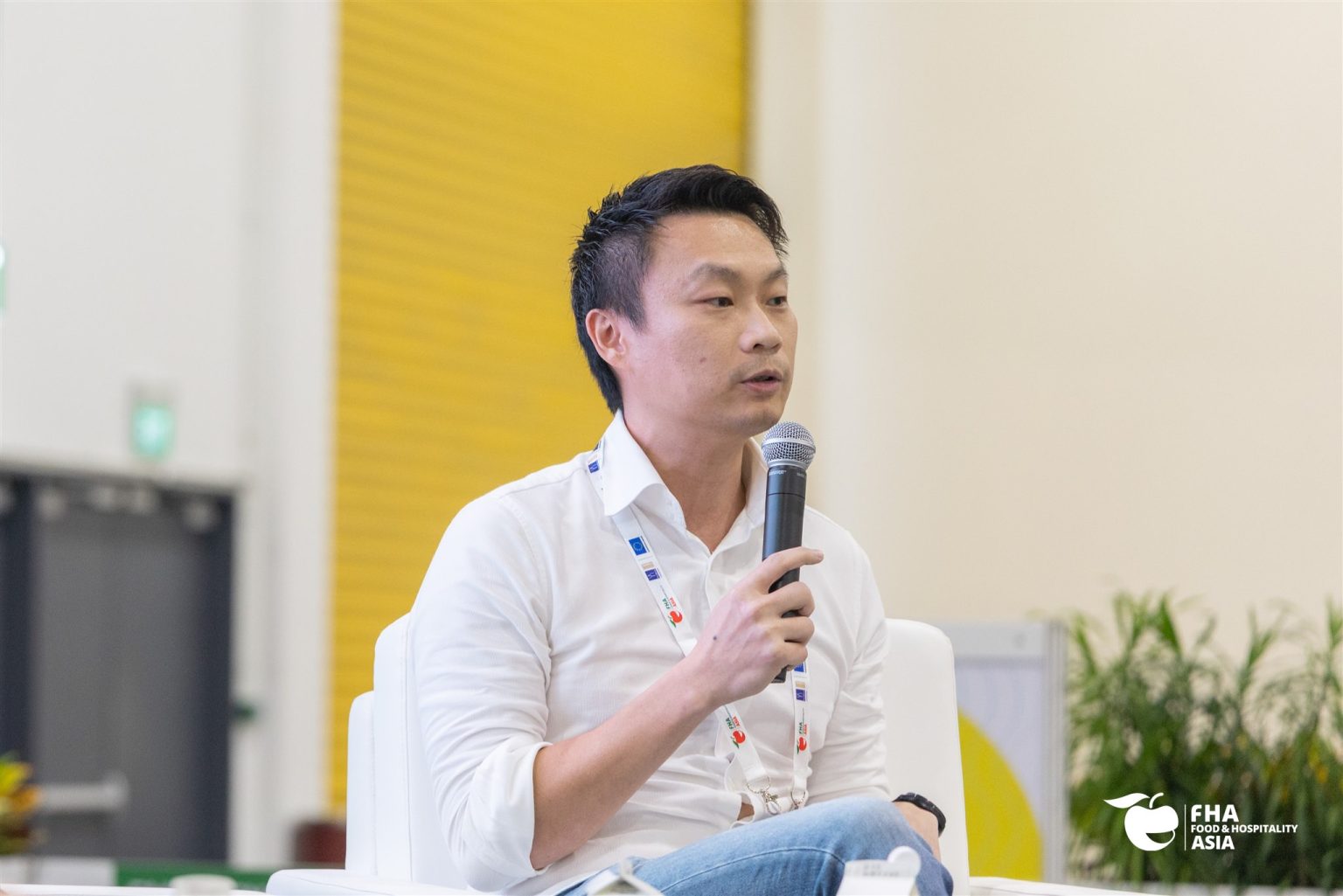
Real-time decision systems, AI-driven execution, live ESG visibility, and adaptive sourcing networks will increasingly become core business capabilities rather than optional enhancements. That was the core message VisionGroup shared during FHA 2026.
A big thank you to Food & Hospitality Asia, the fellow panellists, and everyone who joined the session. With more than 80,000 attendees and 2,750 exhibitors, the event created a strong platform for meaningful conversations around sustainability and sourcing.
If your organisation is looking to improve sustainability, sourcing visibility, operational resilience, or stakeholder engagement, this is the time to move from idea to execution. Contact us at hello@visiongroup.co to explore how Vision Group can support your AI transformation journey!