

Sunday morning runs like clockwork. The rooms are ready, the schedule holds, the volunteers know where to be.
Almost nobody in the room knows who made that happen. It was usually a very small team, and often the same few people every week.
Their work has no fixed edges. Facilities, rosters, vendors, records, enquiries, events, finance admin, and whatever breaks that week all land in the same office.
That pattern is not unique to churches. It describes most lean organisations, and the data shows how exposed they are. In the Ministry of Manpower’s April 2026 study on AI adoption among firms, only 23.9% of organisations with fewer than 25 employees had adopted AI, compared with 76.4% of those with more than 500 staff.
The reason is rarely resistance. Smaller organisations cite implementation cost and a shortage of technical expertise as their main barriers, and many have no one to ask where to begin.
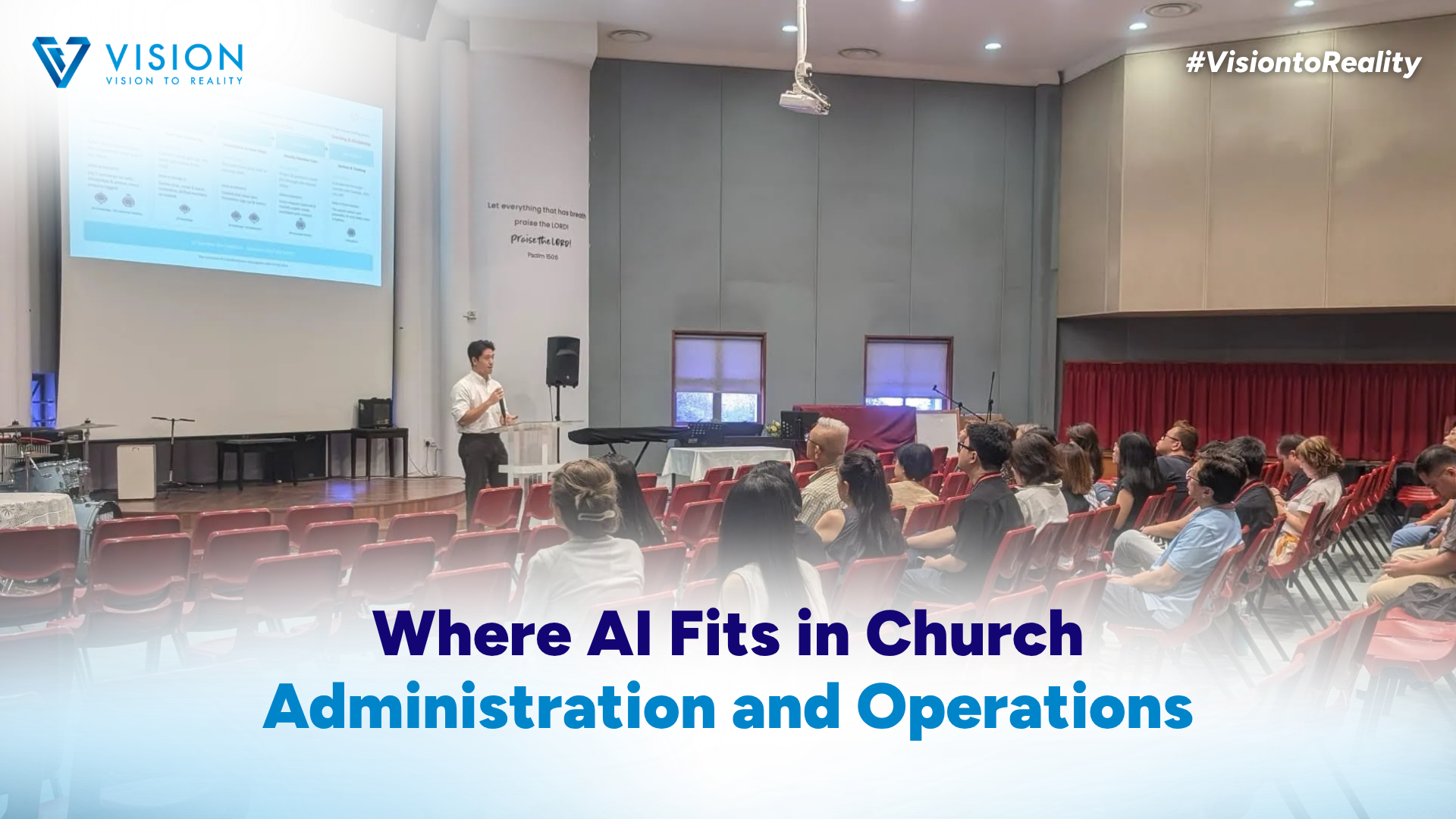
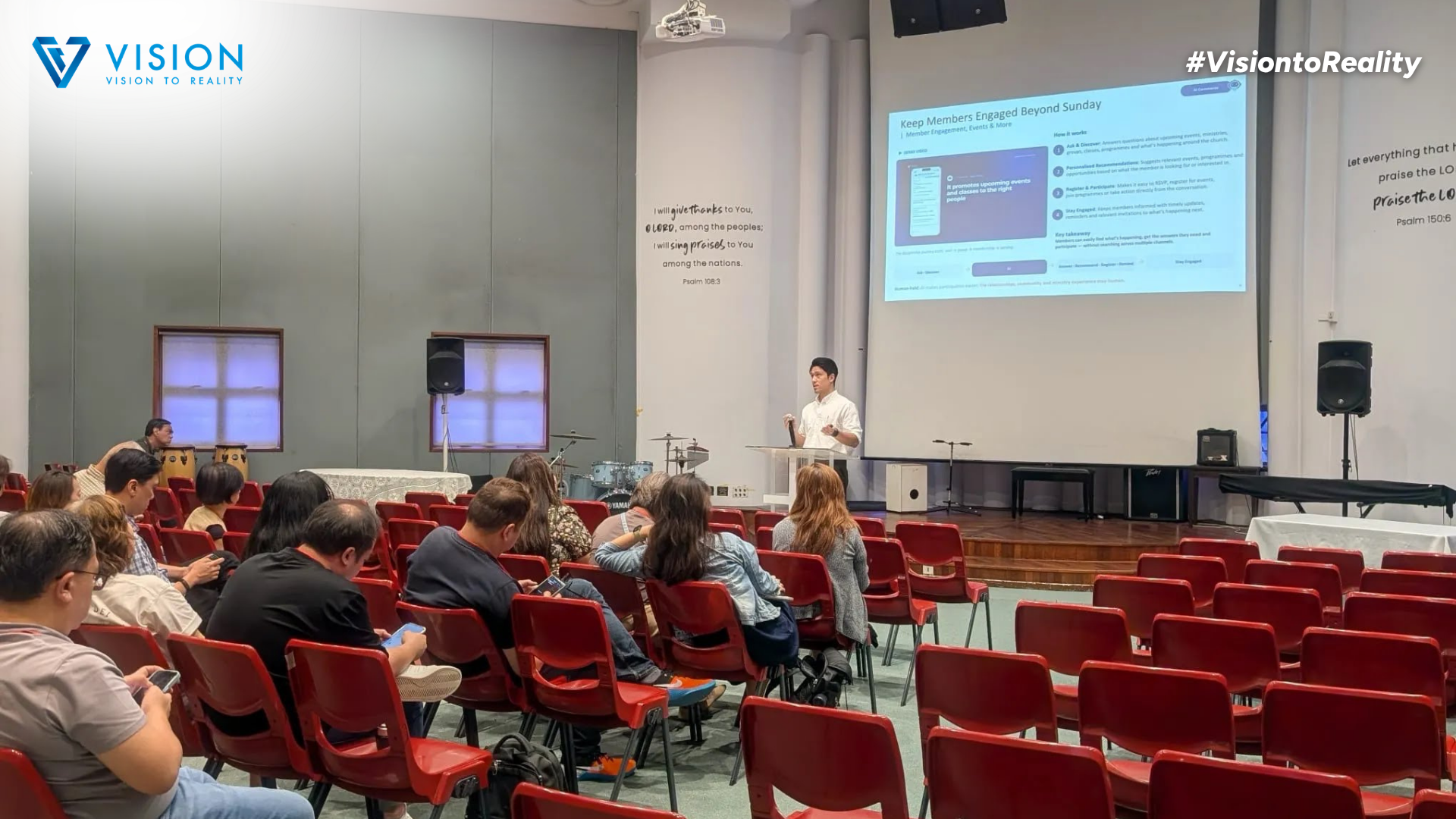
On 20 August, Vision joined Achates 360 to present to a community of church administration and operations staff. Achates 360 has long supported organisations with creative and marketing work. Vision came to show what becomes possible when the operational side gets the same support.
The Job That Has No Fixed Description
Ask five people in this role what their job covers and you will get five different answers.
The portfolio expands to fit whatever needs doing. A role that includes everything cannot be prioritised, because nothing in it is formally out of scope.
So the week fills with the recurring and the urgent, while the work that would actually improve how the office runs never starts.
The constraint is not effort. It is that nobody has the hours to fix the system while still running it.
Capacity
Doing It All Has a Ceiling
The problem is not that the work is hard. It is that one person is the only path through every task, so the office can never move faster than one person's week.
Creative Support Solves Half the Problem
Good creative work changes how an organisation is received. A clear identity, well-made visuals and consistent materials help a message reach the people it was meant for.
This is ground Achates 360 has covered for years, and it matters. Many organisations are only taken seriously once their communication looks as considered as their work.
But strong assets do not fill the roster, chase the vendor, or answer the same enquiry for the ninth time this week. The publicity improves while the back office stays manual.
Communication and operations are different problems, and a team of two feels both. That is why the session covered both sides rather than one.
Where AI Actually Helps a Small Office
The useful question is not whether AI could help. It is which task should be handed over first.
For an office running on a handful of people, the value tends to sit in three places.
Operations
Facility bookings, rosters, vendor follow-ups and event logistics. Work that repeats every week and rarely needs judgement, only reliability.
Administrative Work
Records, attendance, reports, finance admin and the enquiries that arrive at all hours. An office of two cannot answer at 10pm. A properly configured assistant can, using the answers the office already gives.
Creative and Educational Content
Turning one message into a summary, a set of notes, a bulletin item and a social post, without three people rewriting the same material.
Adoption works when it starts with one task the office already dreads, not with a platform.
None of this requires a technical team, and none of it asks the office to change how it works. It asks someone to look honestly at where the hours go and name the first task worth handing over.
Vision and Achates 360 at the Session
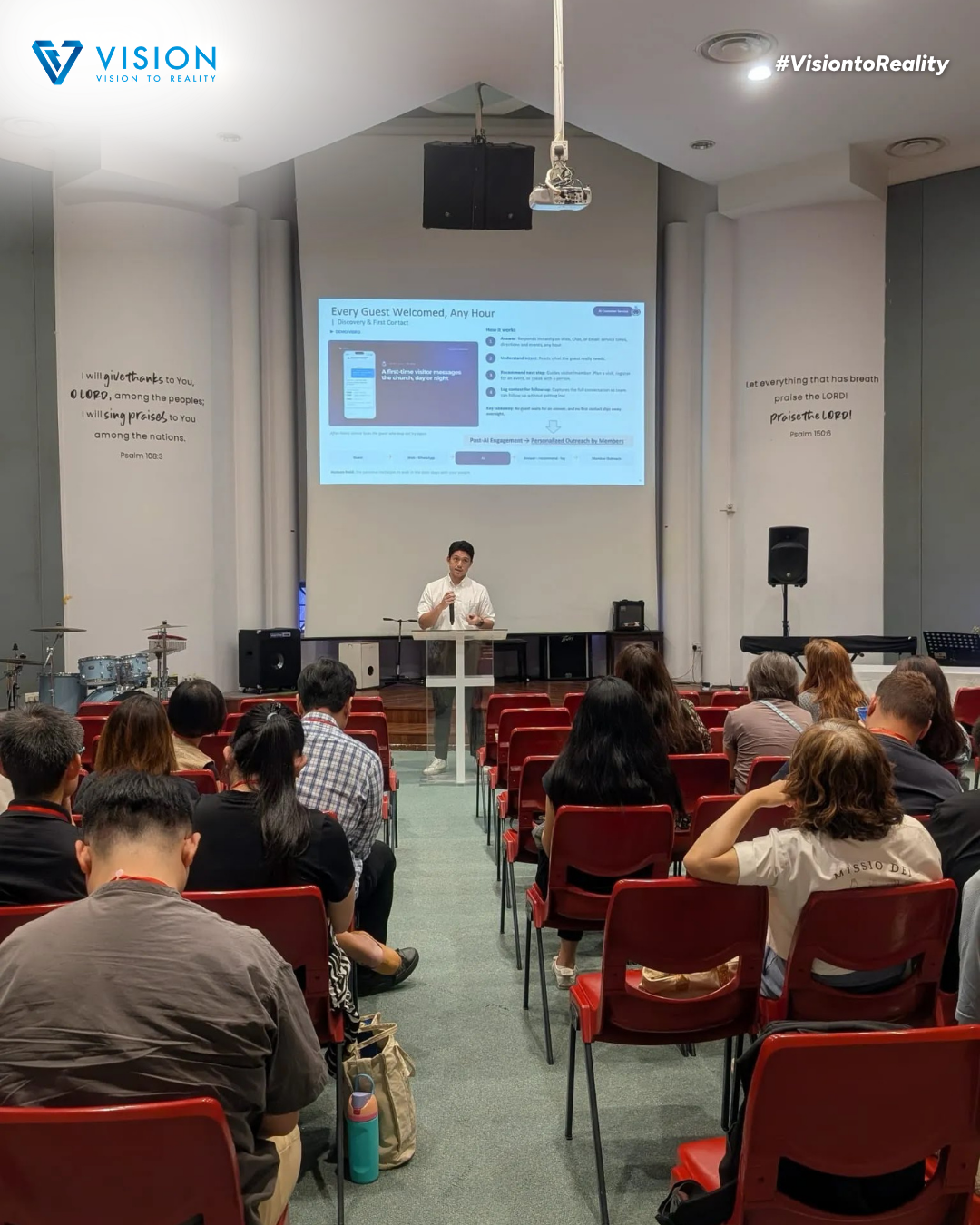
What made the session useful was the audience. These were not people who needed convincing that the workload is real. They carry it every week.
Presenting as part of Achates 360, Vision walked through what practical AI support looks like at this scale: which tasks are worth automating first, what a realistic first project involves, and how to tell a tool that helps from one that becomes another system to maintain.
Much of the value came from the discussion itself. Hearing how these offices actually spend their weeks is where any sensible starting point comes from.
Vision would like to thank Achates 360 for the partnership and the invitation, and everyone who joined for an open and practical conversation.
Find the First Task Worth Handing Over!
Every office has one process that quietly takes more time than it should. Naming it is the whole first step.
With the right starting point, a small team can serve more people, respond faster, and spend more of the week on work that only people can do.
Vision helps organisations find that starting point and turn it into a result they can see. Reach out to us today at hello@visiongroup.co